Tanoura Dance in Desert Safari Dubai
The Enchanting Tanoura Dance Experience in a Dubai Desert SafariDubai is a city known for its towering skyscrapers, luxurious lifestyle, and futuristic vision. ...
The Enchanting Tanoura Dance Experience in a Dubai Desert Safari
Dubai is a city known for its towering skyscrapers, luxurious lifestyle, and futuristic vision. Yet, beyond the glass and steel lies a world deeply rooted in tradition, culture, and timeless desert heritage. One of the most captivating ways to experience this cultural side of Dubai is through a desert safari, an adventure that blends thrill, hospitality, and art. Among the many highlights of a desert safari, the Tanoura dance stands out as a mesmerizing performance that leaves visitors spellbound.
The Tanoura dance is more than just entertainment—it is a living expression of spirituality, history, and artistic devotion. When performed under the open desert sky, surrounded by golden dunes and flickering campfire lights, the experience becomes unforgettable. This blog explores the origins, meaning, performance, and emotional impact of the Tanoura dance as experienced during a Dubai desert safari.
Understanding the Origins of the Tanoura Dance
The Tanoura dance traces its roots back centuries to the Middle East, particularly Egypt, where it evolved as part of Sufi spiritual practices. The word “Tanoura” refers to the colorful, skirt-like costume worn by the dancer. Historically, the dance symbolized a spiritual journey, representing the connection between the earth, humanity, and the divine.
Unlike conventional dances created purely for entertainment, Tanoura began as a meditative ritual. Sufi dancers would spin continuously as a form of prayer, believing that the movement helped them reach a higher spiritual state. Over time, this sacred practice transformed into a cultural performance, while still retaining its deep symbolic meaning.
In Dubai, the Tanoura dance has become an integral part of desert safari entertainment, offering visitors a glimpse into the spiritual artistry of the Arab world.
The Role of Tanoura Dance in Dubai Desert Safari Experiences
A Dubai desert safari is carefully designed to immerse visitors in Arabian culture. After dune bashing, camel rides, sandboarding, and sunset photography, guests gather at a traditional Bedouin-style camp. As the evening progresses and dinner is served, the stage is set for live performances.
The Tanoura dance is usually the first major cultural performance of the night. As the music begins, the atmosphere changes. Soft lights illuminate the desert, traditional instruments echo through the air, and anticipation builds among the audience.
This performance is not just a filler between dinner courses—it is a centerpiece of the evening, designed to transport guests into the heart of Middle Eastern heritage.
The Mesmerizing Costume: A Dance of Colors
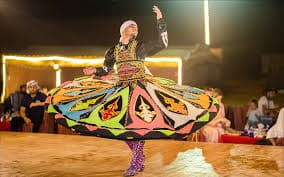
One of the most striking elements of the Tanoura dance is the dancer’s costume. The skirt is wide, layered, and vibrant, often featuring bold colors such as red, blue, green, yellow, and white. These colors are not chosen randomly; they symbolize various elements of life, nature, and spirituality.
As the dancer begins to spin, the skirt opens into a perfect circular shape, creating a visual illusion of floating colors. In many performances, the dancer skillfully removes and manipulates different layers of the skirt, transforming it into shapes, patterns, and even symbolic objects.
Under the desert night sky, with the contrast of dark dunes and warm lights, the costume becomes a living artwork in motion.
Music and Rhythm: The Soul of the Performance
The Tanoura dance is guided by traditional Middle Eastern music. Instruments such as the tabla (drum), oud, and ney (flute) set the rhythm and mood of the performance. The music often starts slow and steady, allowing the dancer to establish balance and control.
As the tempo gradually increases, the dancer’s spinning becomes faster and more intense. Despite the speed, the dancer maintains perfect balance, control, and grace—a testament to years of training and discipline.
The rhythm of the music and the continuous spinning create a hypnotic effect, drawing the audience into the performance and making time feel as though it has slowed down.
The Art of Spinning: Skill, Balance, and Devotion
Spinning continuously for several minutes without losing balance is no easy task. Tanoura dancers train extensively to master this art. The technique involves controlling breathing, focusing the eyes, and maintaining a strong core.
Unlike modern dance styles, Tanoura is not about exaggerated expressions or dramatic gestures. The dancer’s face often remains calm and serene, reflecting inner peace and spiritual focus. This calmness contrasts beautifully with the dynamic motion of the spinning skirt.
Watching a Tanoura dancer perform in the desert is a reminder that true artistry often lies in discipline, patience, and devotion rather than spectacle alone.
Symbolism Behind the Tanoura Dance
The Tanoura dance is rich in symbolism. The continuous spinning represents the movement of the universe, the cycle of life, and the connection between heaven and earth. The dancer’s raised hand often symbolizes receiving blessings from above, while the lowered hand represents sharing those blessings with the world.
In the context of a desert safari, this symbolism takes on added meaning. The vast desert, the star-filled sky, and the quiet stillness of nature enhance the spiritual essence of the dance. Even for viewers unfamiliar with its religious origins, the performance evokes a sense of harmony and reflection.
A Cultural Bridge for International Visitors
Dubai welcomes millions of tourists from around the world, many of whom experience Middle Eastern culture for the first time during a desert safari. The Tanoura dance serves as a cultural bridge, offering an accessible and visually captivating introduction to regional traditions.
Unlike museums or guided lectures, this performance communicates culture through emotion and movement. Visitors may not understand the language or history in detail, but they feel the essence of the tradition through the music, colors, and rhythm.
This emotional connection often becomes one of the most memorable moments of a visitor’s trip to Dubai.
Tanoura Dance vs Other Desert Safari Performances
Desert safari evenings often include multiple performances such as belly dancing, fire shows, and traditional folk dances. Each has its own appeal, but the Tanoura dance holds a unique position.
While belly dancing emphasizes expression and rhythm, and fire shows focus on excitement and thrill, Tanoura stands out for its spiritual depth and hypnotic elegance. It creates a calm yet powerful atmosphere that balances the high-energy elements of the evening.
For many guests, the Tanoura dance becomes the emotional highlight of the night, offering a moment of quiet awe amid the festivities.
Photography and Visual Impact
The Tanoura dance is also a favorite among photographers. The spinning motion, flowing colors, and dramatic lighting create stunning visual opportunities. Long-exposure photography can capture the movement as soft, circular light trails, adding an artistic dimension to the experience.
However, beyond photos and videos, witnessing the dance live in the desert creates a deeper impact—one that no camera can fully capture.
Why the Tanoura Dance Completes the Desert Safari Experience
A desert safari is not just about adventure; it is about storytelling. From the moment guests leave the city behind to the final cup of Arabic tea, every element tells a story of desert life, hospitality, and tradition.
The Tanoura dance plays a crucial role in this narrative. It connects the past with the present, spirituality with entertainment, and art with emotion. Without it, the desert safari would feel incomplete—missing a vital piece of cultural soul.
Conclusion: A Dance That Stays in the Heart
The Tanoura dance in a Dubai desert safari is more than a performance—it is an experience that resonates long after the night ends. It captivates the eyes, calms the mind, and touches the spirit. In the silence of the desert, surrounded by ancient sands and modern travelers, the spinning dancer becomes a symbol of timeless tradition.
For anyone visiting Dubai, witnessing the Tanoura dance in the desert is not just recommended—it is essential. It offers a rare opportunity to step beyond sightseeing and truly feel the rhythm of Arabian culture.
Long after the dunes fade from memory, the image of swirling colors under the desert sky remains, spinning gently in the heart.
Related Articles

Best Skateboarding for Beginners - 2025 - 0nline Guidance - Desert Safari Dubai
Best Skateboarding for Beginners IntroductionSkateboarding for BeginnersWhat is Skateboarding in Des...
9/28/2025
Camel Ride in Desert Safari Dubai.
🐪 Camel Ride in Desert Safari Dubai – A Timeless Arabian Experience🌟 IntroductionDubai is known wo...
10/2/2025
Morning Desert Safari .
Morning Desert Safari in Dubai – A Perfect Start to Your DayDubai is famous worldwide for its glitte...
10/5/2025